
Reviewed By Blake Gilliam, CRNP
Reading Time: 4 minutes
Perimenopause changes everything. Your body starts to respond differently to food, exercise, and even rest. You might notice it takes more effort to lose weight, or that energy drops faster than before. These changes in body composition are driven by falling estrogen and other hormonal changes and strength training is one of the most powerful ways to stay in control.
Table of Contents
How Hormonal Changes Affect Your Body
When estrogen levels fall, your body begins to lose lean muscle and bone mineral density. Metabolism slows and body composition shifts, often leading to more abdominal fat. You may notice less tone in your arms and legs or a drop in overall muscle strength.
Strength training helps counteract the natural loss of muscle and bone that occurs as estrogen declines. It stimulates your body to rebuild stronger tissue, supporting long-term strength and stability.
Why Strength Training Works
Decades of research confirm the benefits of strength training during menopause. Resistance training is one of the best tools for improving women’s health and quality of life during midlife.
Here is why:
- Protects your bones: Lifting weight strengthens the skeleton, improving bone mineral density and lowering the risk of fractures.
- Builds and maintains muscle: It keeps your metabolism active, supporting better body composition and healthy weight.
- Improves blood sugar control: Muscles act like storage for glucose, making your body more insulin-sensitive.
- Supports your heart: Regular strength training and aerobic exercise lower blood pressure and boost circulation.
- Lifts your mood and confidence: Moving weight releases endorphins, easing stress and improving quality of life.
How to Start Strength Training
You do not need a gym membership or heavy barbells to begin. The goal is to move with purpose and progress slowly. Here’s a simple plan to get started safely.
Start with Your Body Weight
Begin by mastering the basics. Bodyweight exercises like squats, lunges, pushups, and planks teach you proper movement and control. Aim for 2–3 sets of 10–15 repetitions of each movement. Rest 45–60 seconds between sets. Once you can complete all reps with good form, you are ready to add resistance.
Add Resistance
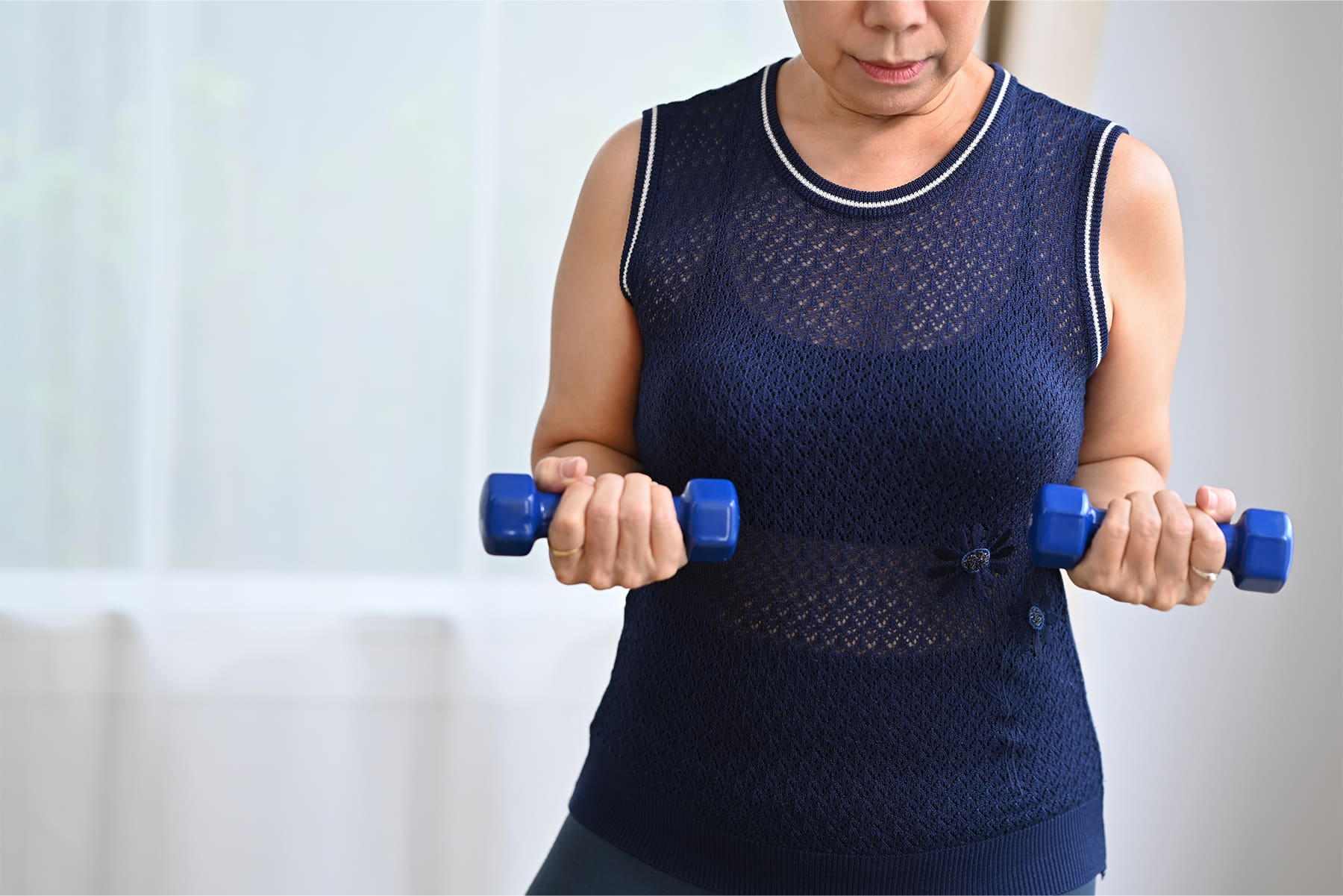
Use dumbbells, resistance bands, or kettlebells to increase challenge. Start light and focus on controlled movements, roughly a two-second lift and three-second lower. Choose a weight that feels challenging for the final two reps of each set. Perform 2–3 sets of 8–12 reps for each exercise.
As you build confidence and control, you can safely progress to heavier loads. Research shows that individuals who lift weights heavy enough to reach near failure in 4–6 repetitions see the greatest gains in muscle strength when each exercise is maintained for 3–5 sets. This style of training should be introduced gradually and ideally under guidance, ensuring form and recovery stay strong.
Train Two to Three Times per Week
Consistency builds progress. Plan for two to three non-consecutive strength days each week. This allows muscles and bones to adapt without overtraining. Alternate between lower-body and upper-body days, or follow a total-body program.
Focus on Major Muscle Groups
Train large muscle groups that support balance, posture, and bone density. Include exercises for your legs, hips, back, shoulders, and core. Example: squats, rows, shoulder presses, and planks. Each session should include 4–6 exercises with 2–3 sets per movement.
Eat Enough Protein
Protein fuels muscle repair and growth. Aim for 25–30 grams per meal. Combine protein with complex carbohydrates before and after workouts to maintain energy and recovery. Staying hydrated also supports muscle function and bone health.
Rest and Recover
Recovery is part of the program. Muscles rebuild and grow stronger when you rest. Get 7–9 hours of sleep per night, and schedule at least one full rest day between strength sessions. Gentle stretching or walking can help reduce soreness and improve flexibility.
What Kind of Exercises Work Best
The best strength training exercises for menopause are the ones that target large muscle groups and build both power and stability. Examples include:
- Lower body: Squats, step-ups, glute bridges.
- Upper body: Rows, chest presses, shoulder presses.
- Core and balance: Planks, side planks, bird-dogs.
- Full body: Deadlifts or kettlebell swings once you have experience.
How It Fits Into an Integrative Approach
Strength training is just one part of feeling strong through perimenopause and beyond. When combined with balanced hormones, proper nutrition, and restorative lifestyle habits, it becomes even more effective. At Madison Integrative Medicine, we create personalized plans that support energy, muscle health, and overall wellness.
Our goal is your total wellness. We help you build a body that feels powerful, steady, and full of life again.
Build Your Strength with Support
If you are ready to feel stronger and more energized, Madison Integrative Medicine can help. Our team creates personalized wellness plans that align with your goals, hormone health, and lifestyle so you can build lasting strength and confidence.
To book an appointment at our wellness center in Madison, AL, call (256) 325-0955 or visit us at 1230 Slaughter Rd Suite C, Madison, AL.
FAQs
Is strength training good for menopause?
Strength training helps protect bone density, preserve lean muscle, and improve metabolism during menopause. It also reduces common menopausal symptoms such as fatigue, weight gain, and mood changes. Regular resistance training supports long-term women’s health and improves quality of life.
What exercises should I avoid during menopause?
Avoid movements that put excess strain on the joints or lower back if you have bone loss or osteoporosis. High-impact jumping, heavy overhead lifts without supervision, or extreme twisting of the spine can increase injury risk. Focus instead on controlled resistance training, aerobic exercise, and flexibility work that builds strength safely.