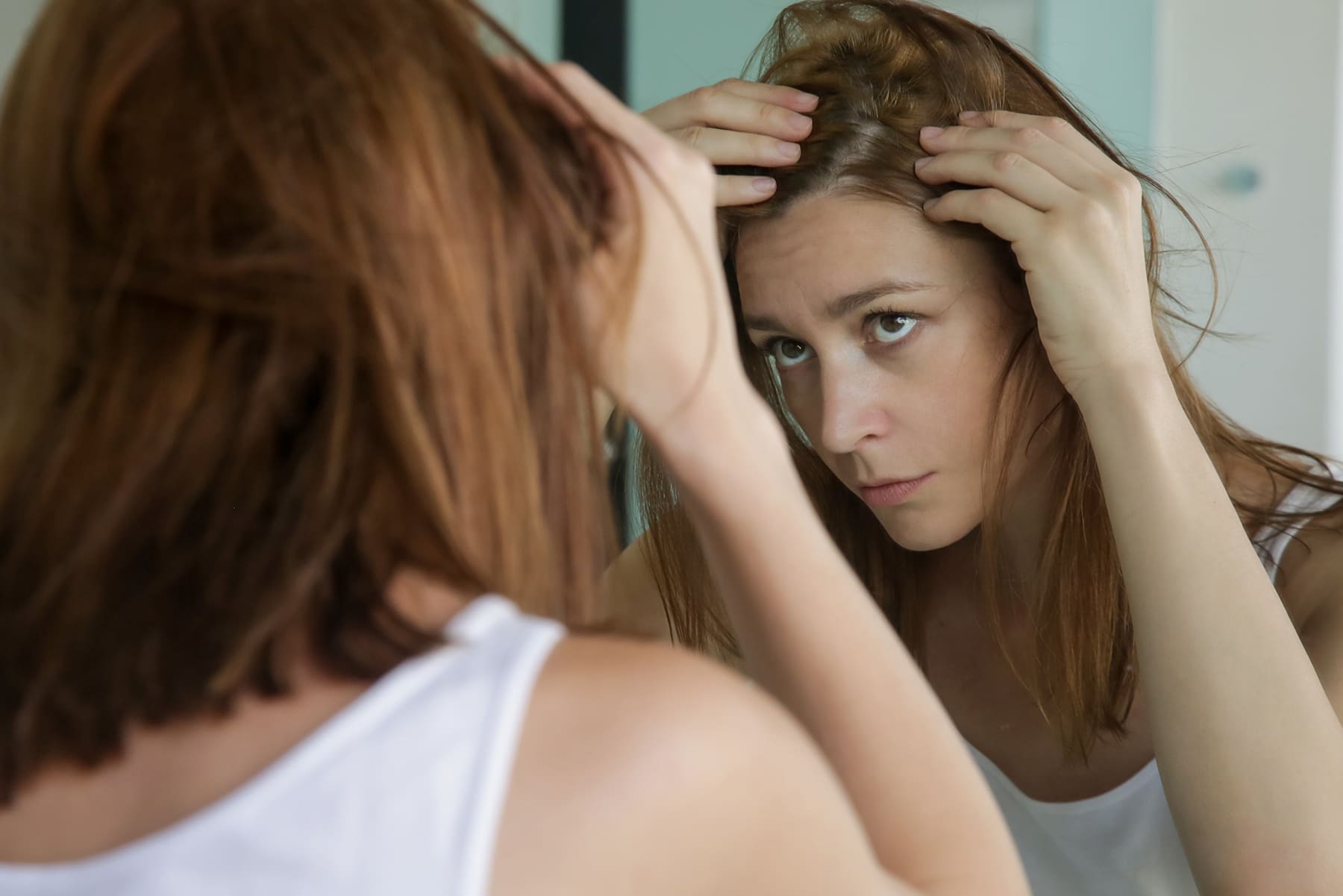

Increased hair shedding or noticeable thinning can be concerning, particularly when the cause is unclear. Thyroid problems are one possible explanation, as both an underactive and overactive thyroid can disrupt the normal hair growth cycle, leading to hair loss and changes in hair texture.
Table of Contents
How Do Thyroid Problems Cause Hair Loss?
Thyroid hormones help regulate metabolism and the normal hair growth cycle. When hormone levels are too high or too low, they can disrupt hair follicle activity, increasing shedding and thinning.
Thyroid hair loss typically involves increased shedding across the scalp rather than isolated bald patches. This happens when hormonal imbalances cause more hair follicles to stop growing and enter a resting phase earlier than normal.
Because hair cycles through growth, rest, and shedding, thyroid problems don’t always show up immediately. Hair may continue growing for a while before it begins to shed, which is why noticeable thinning can develop several months after thyroid hormone levels change.
Hypothyroidism vs. Hyperthyroidism: How They Affect Your Hair
Both conditions can disrupt healthy hair growth, but they affect the body differently.
Hypothyroidism (Underactive Thyroid)
When the thyroid gland produces insufficient hormones, many metabolic processes slow down. Hair follicles may become less active, contributing to thinning and slower hair growth.
Common changes include:
- Dry, coarse, or brittle hair
- Increased shedding throughout the scalp
- Thinning along the outer edges of the eyebrows
- Slower regrowth after normal shedding
Other symptoms may include fatigue, weight gain, constipation, dry skin, and sensitivity to cold.
Hyperthyroidism (Overactive Thyroid)
Excess thyroid hormone accelerates metabolic activity and can also disrupt the hair growth cycle.
Hair may become:
- Finer in texture
- Softer and thinner
- More fragile and prone to shedding
- Less dense, with reduced overall volume
Additional symptoms can include unexplained weight loss, rapid heartbeat, increased sweating, anxiety, and sensitivity to heat.
Neither condition causes the same exact pattern of hair loss in everyone. The severity and duration of the hormonal imbalance can affect how noticeable the changes become.
How Is Thyroid-Related Hair Loss Diagnosed?
Because thinning hair has several possible causes, an accurate diagnosis requires more than evaluating hair appearance alone.
Blood testing to assess thyroid function and identify possible hormonal abnormalities may be recommended.
Common tests include:
- Thyroid-stimulating hormone (TSH): Measures the pituitary hormone that signals the thyroid gland to produce hormones.
- Free T4: Evaluates the amount of unbound thyroxine available in the bloodstream.
- Free T3: May provide additional information in selected cases, particularly when hyperthyroidism is suspected.
- Thyroid antibodies: Can help identify autoimmune thyroid conditions, such as Hashimoto’s thyroiditis or Graves’ disease, when clinically indicated.
At Madison Integrative Medicine, Blake Gilliam, CRNP, uses a functional medicine approach to assess thyroid function alongside nutritional status, hormonal health, and other potential contributors to hair loss. This helps identify underlying concerns and guide appropriate treatment recommendations.
Will Hair Grow Back After Thyroid Treatment?
In many cases, hair growth improves once thyroid hormone levels are properly managed. However, regrowth takes time because hair follicles must progress through their normal growth cycle.
Some people notice reduced shedding or new growth within several months, while fuller recovery may take six months or longer. If thinning continues despite appropriate thyroid treatment, other potential causes of hair loss may need to be evaluated.
FAQs
Can thyroid problems cause hair loss even if blood tests are normal?
If TSH and free T4 levels are normal, significant thyroid dysfunction is less likely to explain the shedding. Other causes, including iron deficiency, stress-related shedding, and hereditary hair loss, should be considered.
Does Hashimoto’s thyroiditis cause hair thinning?
Yes. Hashimoto’s thyroiditis is an autoimmune condition that can lead to hypothyroidism. When thyroid hormone production becomes insufficient, diffuse hair thinning may develop.
Can thyroid medication cause hair loss?
Hair shedding is occasionally reported after beginning thyroid hormone replacement or changing a dose. It may reflect ongoing hormonal changes or another cause. Your provider can review your thyroid levels and medication if symptoms persist.
Addressing Hair Loss and Thyroid Health
At Madison Integrative Medicine, we evaluate thyroid function and other potential causes of hair loss, including nutritional deficiencies and hormonal imbalances. Our personalized treatment plans may include thyroid management to address underlying concerns and support healthy thyroid function.
To schedule a consultation at our wellness center in Madison, AL, call (256) 325-0955 or visit us at 1230 Slaughter Rd Ste C, Madison, AL.